22 December 2025
Astra: three years of milestones to guarantee continuity
By the end of the year, the Astra project will formally conclude. Over the past three years, this initiative has seen a collaborative effort between public and private entities in space research to develop new hardware and software technologies. As one of the ten spokes of the Vitality ecosystem, the project has achieved highly satisfactory results, confirming the exceptional quality of the professionals involved and the standard of Italian aerospace research.
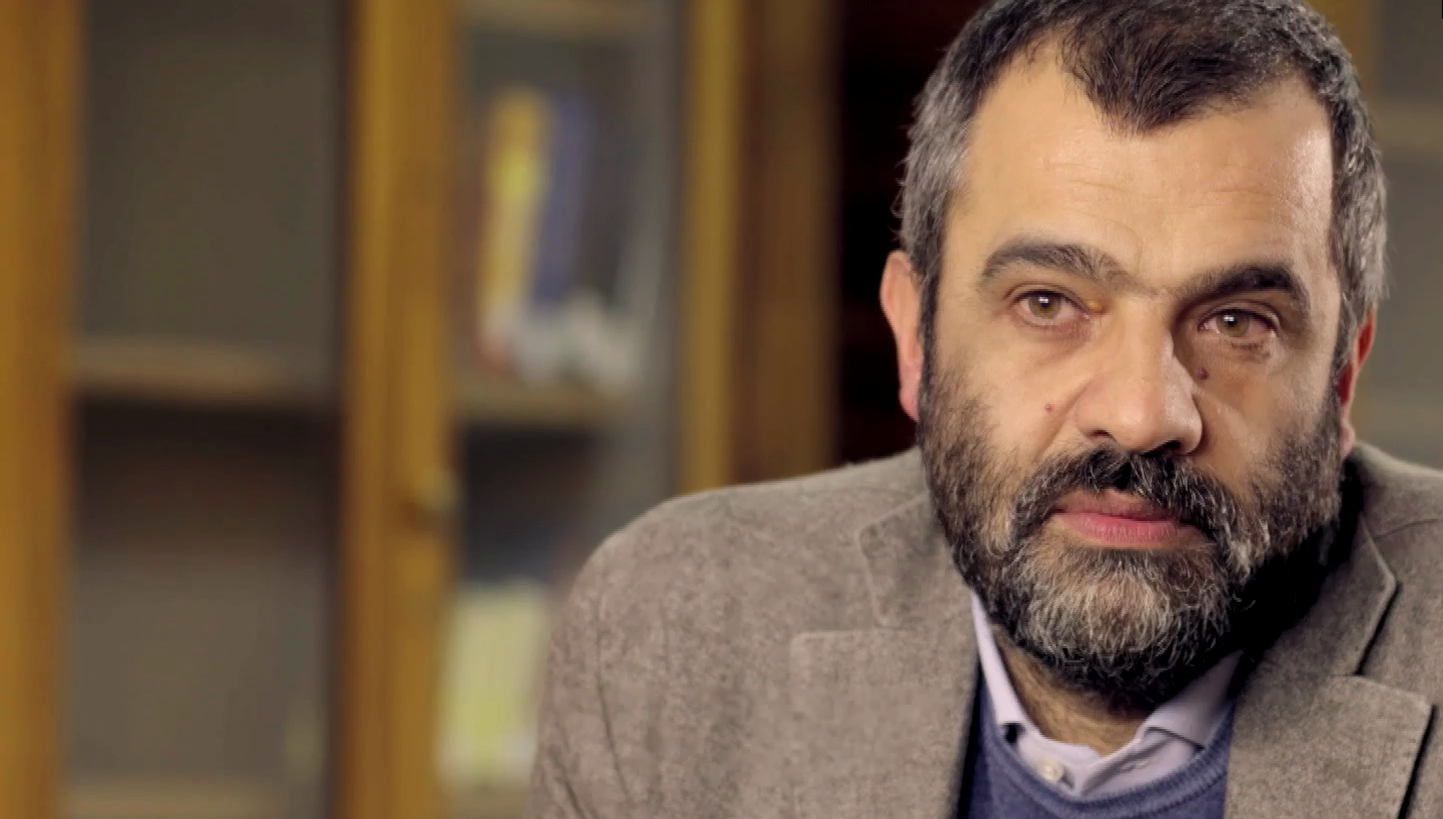
We spoke with Roberto Aloisio—Full Professor at the Gran Sasso Science Institute (GSSI) and project coordinator—to review this journey and better understand the results achieved and their future potential. “On the hardware and research infrastructure front (Work Package 1), the results are tangible,” explains Aloisio. “The team successfully completed testing on the Engineering Model (EQM) of the Crystal Eye scientific payload, passing every trial.”
“In these weeks, we are finalizing the Proto-Flight Model (PFM), the version of the payload intended for satellite integration and subsequent launch,” the Italian physicist says. Furthermore, a new light-detection technology developed by the Bruno Kessler Foundation, one of the project's private partners, was refined and qualified for space use.
Concurrently, research efforts have also yielded fruit in the second work package (“Digital Platforms for Space Industry”), leading to the creation of a new Digital Twin model for satellites and their orbital management. “In this area,” Aloisio states, “we worked closely with Thales Alenia Space Italy to develop advanced Digital Twins that will be engineered for industrial use, demonstrating the success of technological development between academia and industry.”
These significant results from collaborations with private entities demonstrate that one of Astra's primary objectives—constructive public-private cooperation in the space sector—has been met.
The picture is completed by structural innovations achieved through the project, such as the activities managed by the National Institute for Astrophysics (INAF). INAF carried out a significant upgrade of the Campo Imperatore Observatory on the Gran Sasso d’Italia, making it suitable for infrared measurements. These measurements are essential for cosmological studies, such as the observation of supernovae. This work places the Campo Imperatore infrastructure among the world's leading centers for this type of research.
Regarding the third and final work package — dedicated to technology transfer and monitoring the project's impact — the Astra team will release the final results of an innovatively conducted survey in the coming weeks.
As previously noted, Astra is part of the Vitality ecosystem, funded by the National Recovery and Resilience Plan (PNRR) and ranked among Italy's top-funded innovation ecosystems. However, beyond research excellence and documented results, a structural issue remains at the level of national public policy: a lack of continuity.
Aloisio himself highlights this: “The PNRR was fundamental and played a crucial role by promoting the creation of new research infrastructures. The critical issue lies in the fact that no financial coverage has been planned beyond 2026, especially regarding the professional future of many researchers who have been instrumental to the success of these projects.”
At the national level, the emerging scenario could jeopardize the continuation of many projects like Astra. The challenge ahead is to guarantee the resources necessary to secure the benefits derived from structural collaborations between the public and private sectors. Doing so means protecting pathways that contribute to both the national economic system and the country's cultural fabric.